Ball Clay Exporters
Ball clay is a very uncommon rock that can only be found in a few places worldwide. In the production of ceramics, ball clay is very valuable as a base material.
Kaolinite, mica, and quartz make up the majority of ball clay, a sedimentary clay with very fine grains and excellent plasticity. It is an essential raw material used in the production of porcelain, sanitaryware (sinks and toilets), and ceramics because of its remarkable binding strength and workability.
An uncommon rock valued for its flexibility - Ball clays are kaolinitic clays that typically contain organic content, 10–25% of mica, 6–65% of quartz, and 20–80% of kaolinite. Ball clay is created when parent rocks weather and are carried by water. Depending on the amount of primary and accessory minerals present, seams within the same deposit will have different compositions.
Ball clays are extremely plastic, fine-grained clays that are primarily employed in the production of ceramic sanitaryware and whiteware, where their fluidity, unfired strength, and pale colour upon firing are valued. Some clays can even produce final products that are entirely white.
Ball clays are utilized in horticulture as soil additives, as well as in refractories, polymers, adhesives, and sealants.
Kaolinite is the primary component of ball clay, a silicate clay rock: Al2Si2O5(OH)4.
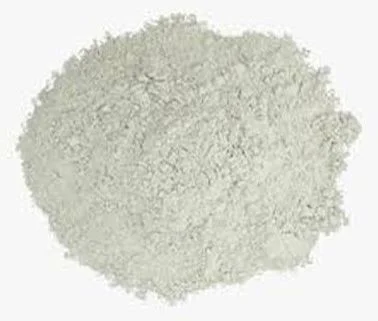
Important Features and Composition: Composition: Usually composed of 20–80% kaolinite, 10–25% mica, 6–65% quartz, and organic materials (like lignite). Plasticity: ball clay has exceptional moldability and bonding power because to its minuscule particle size, which is frequently less than 0.5 micrometers. Color: Because of the organic component, it is frequently grey or dark in its raw, unfired state; nevertheless, it typically fires to a light cream, buff, or off-white color.
Principal Uses: Ceramics and Pottery: Ball clay serves as a basic plasticizer in clay bodies to prevent cracking in molds or on the potter's wheel. Sanitaryware & Tiles: Ball Clay offers the durability and strength required to create intricate, long-lasting shapes like floor tiles and bathroom fittings. Other Uses: Ball Clay functions as a functional filler in adhesives, polymers, and horticulture, as well as a bonding ingredient in refractory bricks (for high-temperature furnaces).
Extensive portfolio offering carefully chosen mixes:
Additionally, we use ball clay mixing platforms in Brazil, Egypt, India, and Indonesia to make sure that our ball clays meet the technical requirements of each particular location.
We can produce high-quality goods for a variety of uses by carefully processing and combining certain clays from various areas.
An essential component of ceramics - Ball clays from Kaushal Sales Corporation give ceramic components like sanitaryware the cohesiveness and workability they need when combined with kaolin. Ball clay gives dinnerware an excellent white-fired color and strong plasticity when combined with kaolin, feldspar, and quartz. Ball clays are highly valued for their flexibility and bonding qualities in wall and floor tiles. They guarantee a flawless finish in glazes and engobes. Plastic clays are used in electrical porcelain insulators to protect against high-voltage currents.
Ball clays and chamottes with a high alumina concentration from Kaushal Sales Corporation are used in refractory applications as additives to increase plasticity during refractory installation or as binders for the manufacture of refractory bricks.
Ball clays from Kaushal Sales Corporation are also utilized as fine, multipurpose fillers and extenders to improve the performance of rubber, plastics, adhesives, sealants, fertilizers, and insecticides.
With over 200 years of combined experience, we at Kaushal Sales Corporation have a thorough understanding of our customers' needs and markets. Our experts will keep assisting clients with their technical difficulties by offering local assistance and the best ball clay blends to improve their performance.